

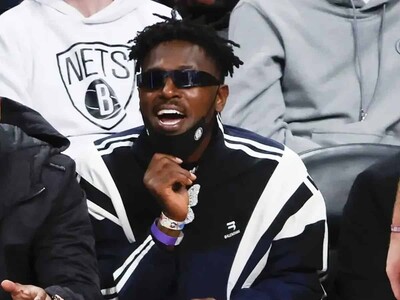
Former NFL wide receiver Antonio Brown was sentenced to three years of probation on Friday after reaching a plea deal over a Florida shooting.
A Florida state court judge approved the agreement in the 11th Judicial Circuit in Miami, allowing the former Super Bowl champion to avoid prison time after he was charged with attempted second-degree murder.
Brown resolved the case by pleading guilty to a reduced charge of aggravated assault to avoid a criminal conviction. The charges stemmed from his arrest following a shooting in May 2025 outside a boxing event in Miami.
His attorney, Mark Eiglarsh, announced the agreement in a statement on Instagram, noting that Brown had faced up to 30 years in prison with a mandatory minimum term of 20 years. Eiglarsh said that his client pleaded guilty to a lesser charge, received probation with no criminal conviction, and accepted the resolution after prosecutors made an offer the defense could not turn down.
Probation terms and court conditions
Judge Marisa Tinkler Mendez imposed several strict conditions on the former football player as part of the sentence. Brown must attend professional counseling every week, maintain no contact with the victim, and is strictly prohibited from possessing a firearm.
Court records filed in Miami-Dade County confirm that the case is now officially closed. Judge Mendez also granted Brown permission to travel, easing restrictions that had confined him during the criminal proceedings.
Before the plea agreement was finalized, Brown had been held under house arrest with an electronic ankle monitor. He had been placed on home detention following his extradition from Dubai and had posted a $25,000 bond to secure his release from custody. Extradition arrangements allow law enforcement authorities to return individuals across international jurisdictions to face active state indictments.
Probation in Florida allows individuals who resolve criminal charges to remain outside state correctional facilities under supervision, provided they fulfill all mandated requirements such as counseling and good behavior.
Self-defense claims under Florida law
Brown had argued throughout the proceedings that he was protected under Florida's Stand Your Ground self-defense law and was entitled to immunity. He maintained that he had acted in self-defense during an altercation with Zul-Qarnain Kwame Nantambu outside the Miami venue.
Nantambu, who was identified as the victim in the incident, told media outlets that he wished to forgive Brown and wanted authorities to bring the case to a close.
Florida's Stand Your Ground statute, enacted in 2005, establishes that an individual has no duty to retreat before using force, including deadly force, if they reasonably believe it is necessary to prevent imminent death or great bodily harm. Under Florida criminal procedure, defendants who claim self-defense can seek immunity hearings before trial in an effort to have criminal charges dismissed before reaching a jury.
The 11th Judicial Circuit of Florida, where Brown formalized his plea agreement, is the state court system responsible for felony cases and trial proceedings throughout Miami-Dade County.
Career with Steelers and Buccaneers
Brown spent the majority of his professional football career with the Pittsburgh Steelers, where he developed into one of the league's most prominent wide receivers. During his nine seasons in Pittsburgh, he was selected to the Pro Bowl seven times and earned first-team All-Pro honors on four occasions while consistently ranking among the league leaders in receiving yards and catches.
Brown later joined the Tampa Bay Buccaneers, where he won Super Bowl LV in 2021. That championship victory in Tampa marked the pinnacle of his late-career resurgence before his eventual departure from the league.
With the Miami-Dade County court case now concluded and travel permissions restored, Brown will serve his three-year probation under regular supervision, completing mandatory weekly counseling while abiding by the weapons ban and protective orders.


