
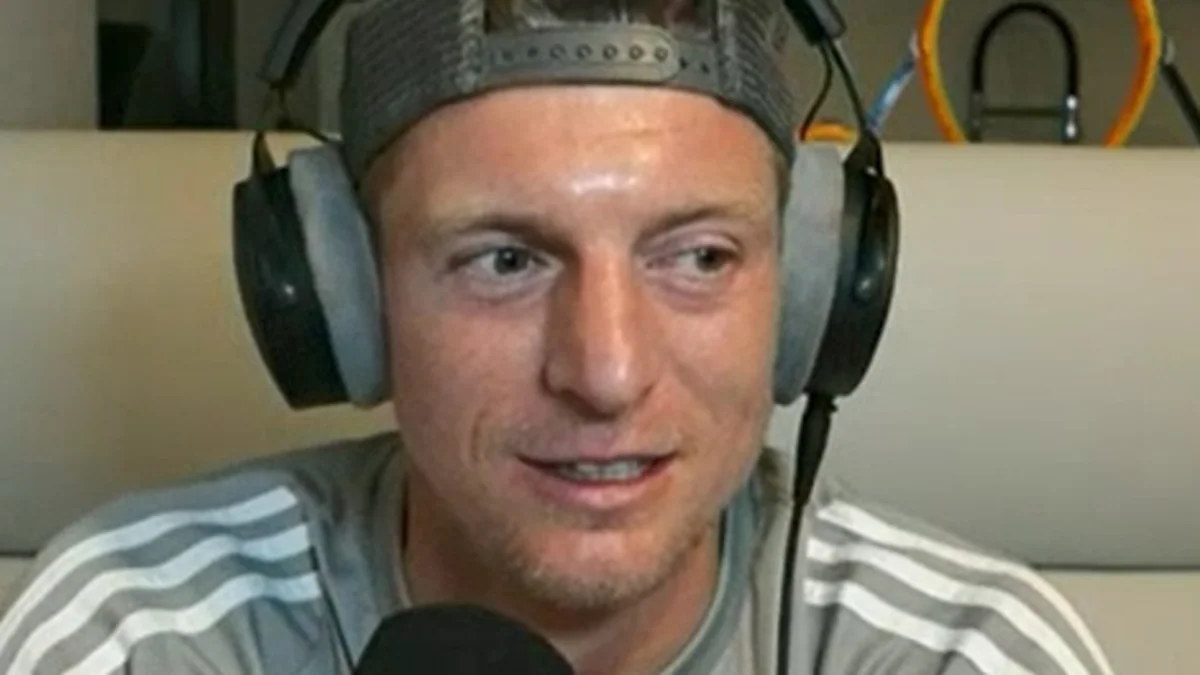
Toni Kroos has warned that Barcelona will struggle to win the Champions League because their current tactical approach leaves them exposed at the back. The former Real Madrid midfielder, speaking on his weekly podcast, argued that the high-risk system introduced by manager Hansi Flick demands far more defensive quality than the Catalan club's current squad can provide.

Kroos admitted that he genuinely enjoys watching Barcelona and finds their attacking football entertaining to follow. However, he insisted that their reliance on outscoring opponents will ultimately backfire in European competition, where defensive frailties are ruthlessly punished by elite opposition.
According to Kroos, the fundamental problem lies in Barcelona's strategic concept of simply creating more chances than the other team and depending on scoring two or three goals every match to secure a win. He warned that this philosophy inevitably clashes with the realities of the Champions League, where teams either possess the attacking firepower to score freely or have the defensive discipline to deny Barcelona the space they need to play.
Flaws in the tactical approach
Kroos offered his critique during the latest episode of Einfach mal Luppen, the German-language podcast he co-hosts with his younger brother Felix Kroos. Despite hanging up his boots earlier in the year, the 34-year-old German has remained closely connected to the sport, following matches across both LaLiga and the Champions League while sharing regular tactical analyses with listeners.
Focusing on Barcelona's recent performances, Kroos went further by stating that the team simply cannot assemble a solid defence with their present group of players. In his assessment, Flick's tactical setup requires defenders who can hold their own in isolated situations, something he believes the squad cannot currently sustain over the course of a demanding European campaign.
The search for recovery pace
To explain the tactical shortcoming, Kroos pointed to the absence of a defender capable of being left in an isolated one-on-one duel with substantial territory behind them. He noted that Barcelona lack a player in the mould of Bayern Munich centre-back Dayot Upamecano, whom he highlighted as an example of a defender who can be trusted in extreme defensive situations.
Kroos explained that Barcelona have no one who can be left completely alone in a one-on-one contest with 30 metres of open space behind his back with the full assurance that he will handle the threat. Without a defender possessing that combination of physical power and recovery pace, Kroos warned that Barcelona's aggressive pressing structure carries dangerous consequences whenever an opponent manages to bypass the first line of pressure.
According to the former midfielder, when an opposing team successfully breaks through Barcelona's high press, they immediately discover vast open spaces to attack. Kroos cautioned that giving elite European forwards that amount of room can prove lethal in high-stakes knockout ties.
Pau Cubarsi singled out for praise
Amid his critical appraisal of the Barcelona backline, Kroos singled out only one defender for praise: teenage centre-back Pau Cubarsi. The German described Cubarsi as comfortably the club's finest defender, observing that the youngster successfully combines strength in individual duels with genuine recovery speed.
Despite that glowing endorsement of Cubarsi, Kroos insisted that he sees no other defender in Barcelona's squad capable of managing those high-risk scenarios without assistance. Relying on an isolated teenager to hold together an entire defensive scheme against the best attacks in Europe, he suggested, creates an unsustainable burden over the course of a tournament.
Cubarsi, a product of Barcelona's famous La Masia academy, broke into the first team at just 16 years of age and quickly established himself as a regular starter. While the young Spaniard has earned international recognition for his maturity and composure on the ball, Kroos believes the collective structure behind Flick's press remains vulnerable.
Hansi Flick and European ambitions
Flick was appointed Barcelona manager in the summer of 2024, succeeding Xavi Hernandez with the mission of returning the club to the summit of European football. The former Bayern Munich and Germany head coach immediately implemented an aggressive tactical philosophy based on relentless pressing, dominant possession, and an adventurous high defensive line that seeks to trap opponents offside.
While that bold approach has yielded high-scoring victories in domestic competition, continental tournaments have historically demanded greater defensive balance. Barcelona have not lifted the Champions League trophy since their 2015 final victory in Berlin, having endured a decade marked by dramatic eliminations against disciplined, counter-attacking opposition.
Experience from the Madrid rivalry
Kroos speaks from extensive experience at the very highest level of continental football. The midfielder brought an end to his playing career in the summer of 2024 after winning six Champions League titles, five with Real Madrid and one with Bayern Munich, alongside the 2014 World Cup with Germany. Over a decade at the Santiago Bernabeu, he faced Barcelona in dozens of El Clasico encounters, developing an intimate understanding of the demands placed on teams competing for major trophies.
His brother Felix, who played professional football in Germany for clubs including Werder Bremen and Union Berlin, regularly discusses modern tactics with Toni on their podcast. For now, Barcelona must continue their domestic and European campaigns knowing that former rivals and seasoned observers are watching closely to see if Flick's high-octane football can survive against the elite of the continent.