


Adelaide will host the Australian MotoGP Grand Prix from 2027 on a new 96 million Australian dollar street circuit following an official presentation by South Australia Premier Peter Malinauskas.
The project represents the first time the motorcycle world championship will race on a city center street circuit. Development of the venue costs approximately 60 million euros and follows months of joint work between MotoGP organizers, the International Motorcycling Federation and local partners in South Australia.
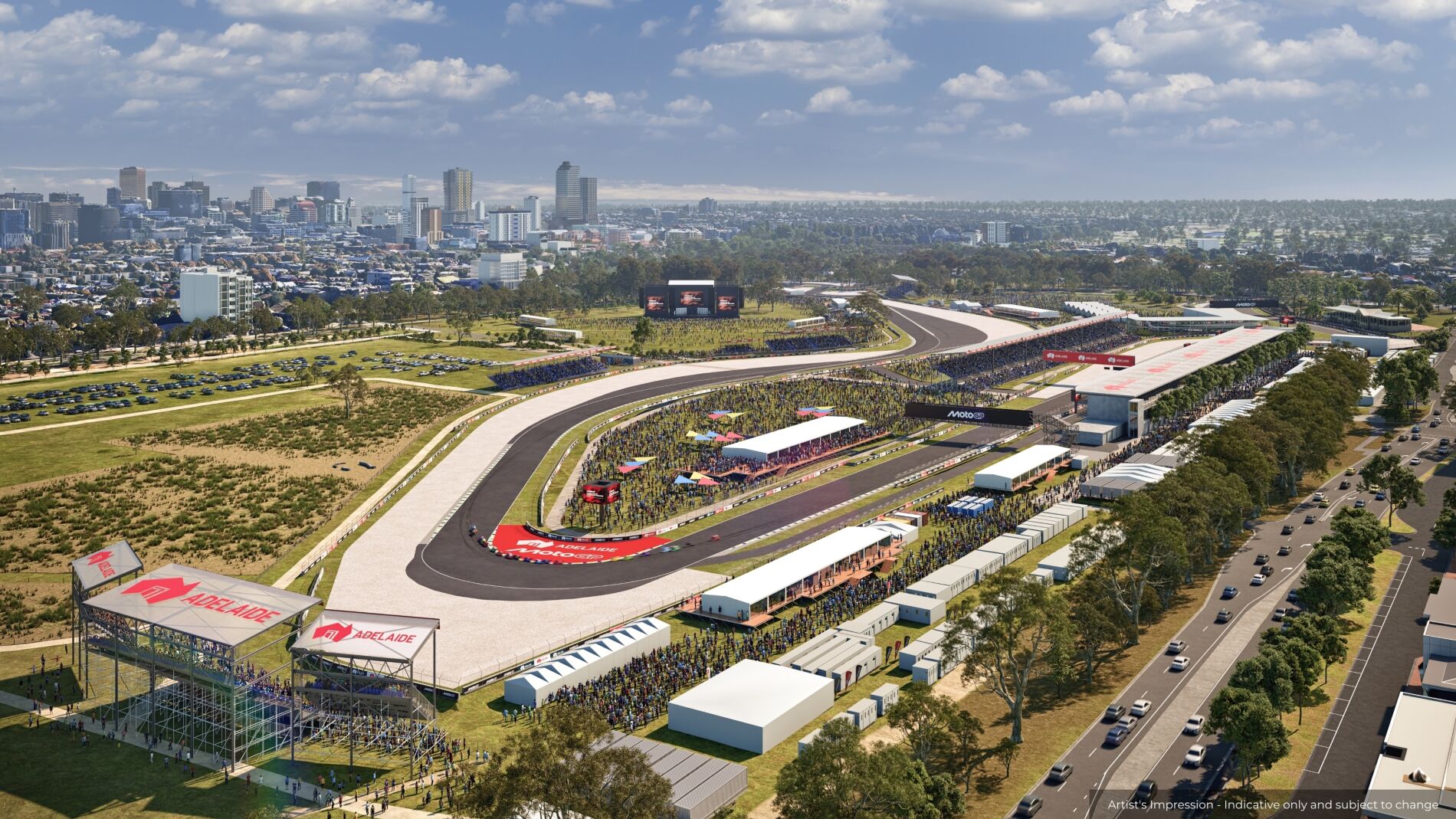
Carlos Ezpeleta, the deputy chief executive officer of MotoGP, detailed the project at the MotorLand Aragon circuit ahead of the 2026 Aragon Grand Prix. He said professional riders had already examined the proposed track layout and were delighted with the venue design.
Adelaide, the capital city of South Australia, has an established history of hosting major motor racing events. The city previously hosted the Australian Grand Prix in Formula One on a street circuit in the East Parklands between 1985 and 1995.
Circuit design and rider safety
Addressing the technical presentation, Ezpeleta explained that preliminary images of the circuit were not randomly generated artificial intelligence graphics, but exact computational calculations of the layout design. He expressed gratitude to the International Motorcycling Federation and technical staff who created the plans.
Former world champion Loris Capirossi guided the sporting and safety aspects of the track layout. Ezpeleta noted that the circuit includes every required MotoGP safety measure for a city center setting, adding that organizers had conducted extensive work with the South Australian government.
The International Motorcycling Federation, known as the FIM, acts as the global governing body for motorcycle racing and sets circuit safety standards. Loris Capirossi, a three-time world champion, serves as a safety representative for riders, inspecting track conditions and run-off areas.
Ezpeleta emphasized that reassuring riders was a key priority during planning. He confirmed that run-off areas were calculated and verified to ensure a standard circuit environment, adding that significant work remains ahead between now and November of next year.
Environmental plans and public access
Environmental management formed a core part of the track design. Ezpeleta stated that every existing tree in the park was plotted onto circuit plans, allowing engineers to modify the track safely while minimizing impact on the parkland.
Organizers confirmed that trees removed during construction will be replaced at a ratio of 10 to one. Ezpeleta acknowledged that a small number of trees must be felled and replanted, but emphasized that the total number of trees in the park will increase.
To protect public access, project planners relocated the paddock and main building alongside the park rather than inside it. Ezpeleta explained that this positioning ensures local residents can continue using the park for most months of the year.
Comparison with Madrid circuit design
Ezpeleta also addressed questions about whether MotoGP could race at proposed street venues such as Madrid. He stated that the Madrid Formula One circuit model would not fit motorcycle racing, noting that Formula One and Adelaide street circuits have entirely different technical requirements.
MotorLand Aragon, located near Alcañiz in northeastern Spain, served as the setting for the presentation. The permanent road racing facility regularly hosts rounds of the MotoGP world championship.


