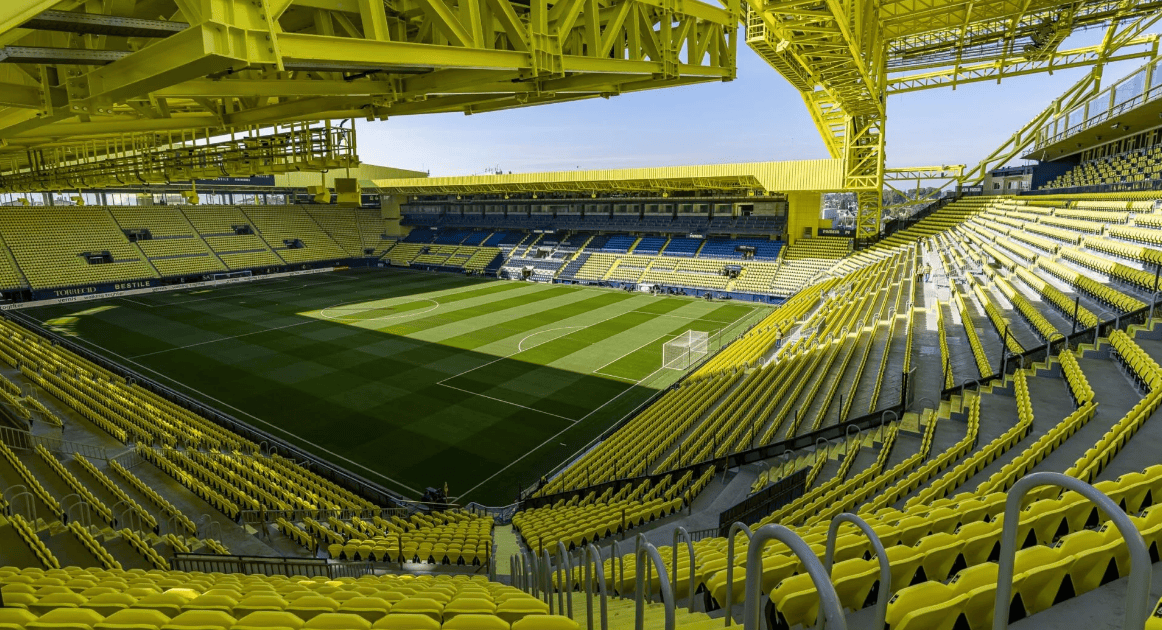


A multidisciplinary FIFA delegation has concluded its inspection tour of the three Portuguese stadiums selected to host matches during the 2030 World Cup.
The Portuguese Football Federation confirmed the completion of the technical visit on Friday after officials reviewed tournament infrastructure across Lisbon and Porto.

The inspection began in Lisbon on Monday at Estadio Jose Alvalade, the home ground of Sporting CP, before continuing on Tuesday at SL Benfica's Estadio da Luz. The delegation then travelled north to conclude its week-long evaluation on Friday at FC Porto's Estadio do Dragao.
The three stadiums constitute Portugal's full venue roster for the 2030 tournament, which the nation will stage jointly with Spain and Morocco. All three grounds originally opened ahead of the UEFA Euro 2004 championship and represent the country's primary elite football facilities.
Upgrades and investment at Estadio do Dragao
At Estadio do Dragao, FC Porto vice-president and operational executive director Joao Borges met with the FIFA delegation to present the current state of the blue and white stadium complex. Borges showed visiting inspectors the technical improvements completed since FIFA's previous inspection and set out future construction work planned for the ground.
Borges highlighted an investment of 32 million euros made by FC Porto over the past year to upgrade club facilities. He emphasised that the club looked far beyond the tournament itself, explaining that the 2030 World Cup was not a finish line but a starting point ensuring the venue can serve supporters and visitors for another 20 years.
The club executive said the World Cup represented an extraordinary opportunity for FC Porto, the city and the northern region. He explained that hosting matches would help the club reinforce its international profile and showcase its infrastructure, while energising tourism and stimulating the wider regional economy.
Estadio do Dragao, which opened in November 2003, holds approximately 50,000 spectators. The stadium staged the opening game of Euro 2004 and subsequently hosted the 2019 UEFA Nations League final and the 2021 UEFA Champions League final.
Municipal backing and regional identity
Porto city councillor for sport Rodrigo Passos also addressed the FIFA delegates during their time in the city. Passos presented the strategic advantages of the northern capital, commonly known as A Invicta, pointing to the city's long track record of hosting international sporting and cultural events.
Passos told officials that local leaders wanted to unite Porto's distinctive and determined identity, which is known for rolling up its sleeves to fight for what it believes in, with a sporting initiative that can drive transformation across several areas of city life.
The title A Invicta, meaning the Unvanquished, dates back to the 19th-century Siege of Porto during the Portuguese Civil War. Today, Porto stands as Portugal's second-largest city and the commercial centre of the northern region, with extensive transport connections and hotel capacity.
Potential training centres in northern Portugal
Beyond the main stadium, the inspection program on Friday included reviews of local hotels and several facilities identified as candidate training centres for competing national squads.
The technical delegation visited Estadio Dr. Jorge Sampaio, the municipal ground in Pedroso that serves as the home venue for FC Porto's reserve team. Inspectors also evaluated the Centro de Treinos e Formacao Desportiva Jorge Costa, FC Porto's primary training and youth academy complex located in nearby Vila Nova de Gaia.
The itinerary further included Estadio de Sao Miguel, the home ground of Gondomar SC, and Estadio do Mar, the coastal stadium of Matosinhos club Leixoes SC. Delegates also inspected the headquarters and facilities of the Porto Football Association, the governing body overseeing regional football throughout the district.
Candidate training centres must meet FIFA criteria regarding pitch quality, private training spaces, medical rooms and security to host participating national teams during the tournament.
Government backing and future preparations
Portuguese Secretary of State for Sport Pedro Dias highlighted the active participation of the national government in supporting the 2030 project.
Dias stated that the executive branch is working alongside the Portuguese Football Federation, the host municipalities and the participating clubs to deliver the best possible experience for competitors and visitors. He added that authorities want to make certain that the legacy created by staging the competition continues long after 2030.
The FIFA visit was guided throughout by the Portuguese Football Federation's dedicated project team, coordinated by tournament director Antonio Laranjo. Laranjo noted that Friday marked the final stop in Portugal for this particular inspection round, but stressed that further visits will take place because time is short and significant work remains ahead of 2030.
Laranjo pointed to the close cooperation between national authorities, football governing bodies and the three host clubs as vital to meeting FIFA deadlines. The 2030 World Cup will mark the centenary of the tournament, with opening matches in Uruguay, Argentina and Paraguay before the main competition unfolds across Portugal, Spain and Morocco.