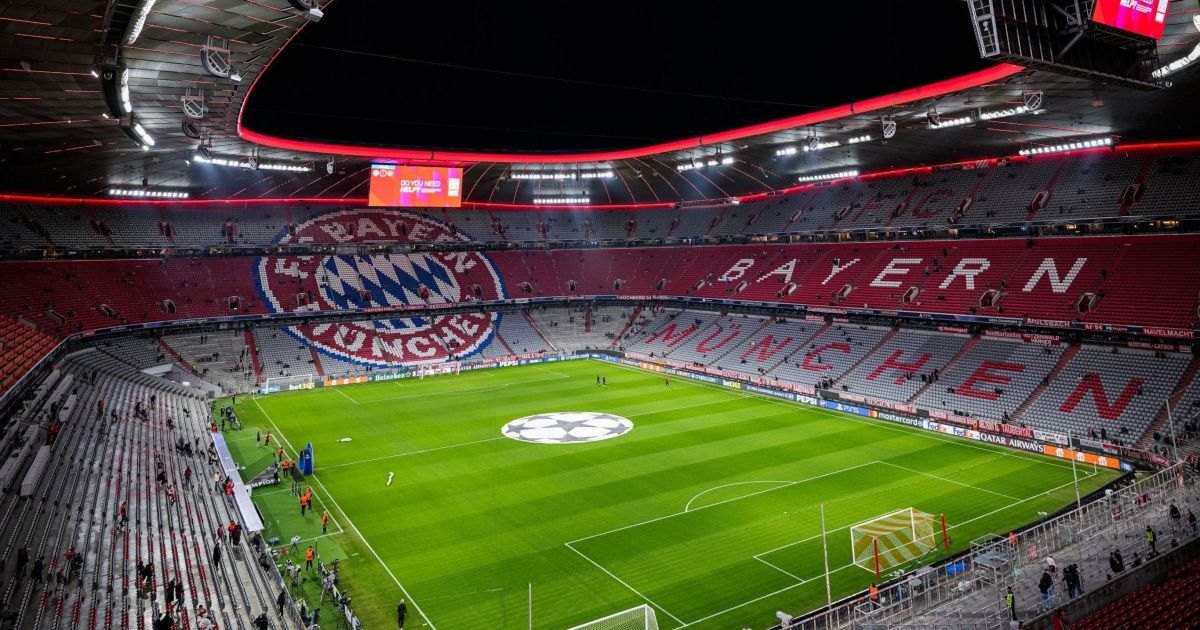


The UEFA Executive Committee convened in Thessaloniki on Tuesday to select host cities for major European club and international tournament finals through 2029.
Meeting from 9:00 a.m. to 1:00 p.m., the committee focused on ratifying structural changes to qualifying formats for the European Championship and World Cup based on a single 36-team league table.
UEFA, the administrative body for football in Europe, regularly brings its executive committee together in host cities across the continent to determine host venues, update tournament rules, and approve long-term structural reforms.
Swiss Model for European Qualifiers
Under the proposed qualification model, traditional group stages will be replaced by a single standings table operating on a Swiss-system framework. Participating teams will not be required to play every other nation in the division.
The plan outlines a league structure featuring 36 top European national teams. Each nation will play six matches during the qualifying stage, evenly divided into three home fixtures and three away fixtures.
Opponents for each team will be drawn from distinct seeding pots established prior to the official draw, creating a balanced and competitive schedule across the group.
The format draws directly from the Swiss-system league phase introduced to the UEFA Champions League for the 2024-25 club season. Designed to replace standard four-team pools, the single-table model maintains competitive stakes by ensuring that minor point adjustments or goal differences alter positions in the standings.
UEFA expects that scheduling all fixtures on the final matchday to kick off simultaneously will produce heightened tension and sustained spectator interest across the closing round.
Host Selection and Competition Regulations
Selecting host venues for a broad slate of major European showpiece events forms a central element of the executive committee's agenda in Greece.
The committee is considering host city candidacies for the 2028 and 2029 finals of the UEFA Champions League, the UEFA Europa League, the UEFA Conference League, and the UEFA Women's Champions League. Decisions are also slated for the 2027 and 2028 UEFA Super Cups, alongside the 2027 UEFA Futsal Champions League final.
The annual Super Cup places the reigning Champions League winners against the Europa League title holders, while the Futsal Champions League represents Europe's top club competition for indoor football.
Delegates are also examining regulatory updates governing women's football competitions, including the Women's Nations League and qualifying rounds for the 2027-29 Women's European Championship, alongside rules for men's and women's youth tournaments for the 2027/28 season.
A separate agenda item addresses modifications to the 2026/27 UEFA Nations League regulations, introducing a revised playoff format linked to structural revisions approved in May that streamlined the tournament from four leagues into three.
Grassroots Festival in Aristotelous Square
Beyond formal committee discussions, UEFA activities in Thessaloniki will move to Aristotelous Square at noon for a grassroots football festival held under the UEFA Football in Schools initiative.
UEFA President Aleksander Ceferin and Hellenic Football Federation President Makis Gagatsis are scheduled to attend the opening ceremony in Thessaloniki's principal waterfront square.
The grassroots festival involves 60 schoolboys and schoolgirls selected from schools across Thessaloniki, who will participate in football sessions and meet prominent figures from European and Greek football.
International guests taking part in the school event include former Germany striker Oliver Bierhoff, former France midfielder Christian Karembeu, former Croatia international Aljosa Asanovic, and Nadine Kessler, the head of women's football at UEFA.
Greek football is represented at the festival by former national team players Theodoros Zagorakis and Angelos Basinas, both members of Greece's Euro 2004 winning team, alongside Dimitris Papadopoulos and Dimitra Panteliadou.