

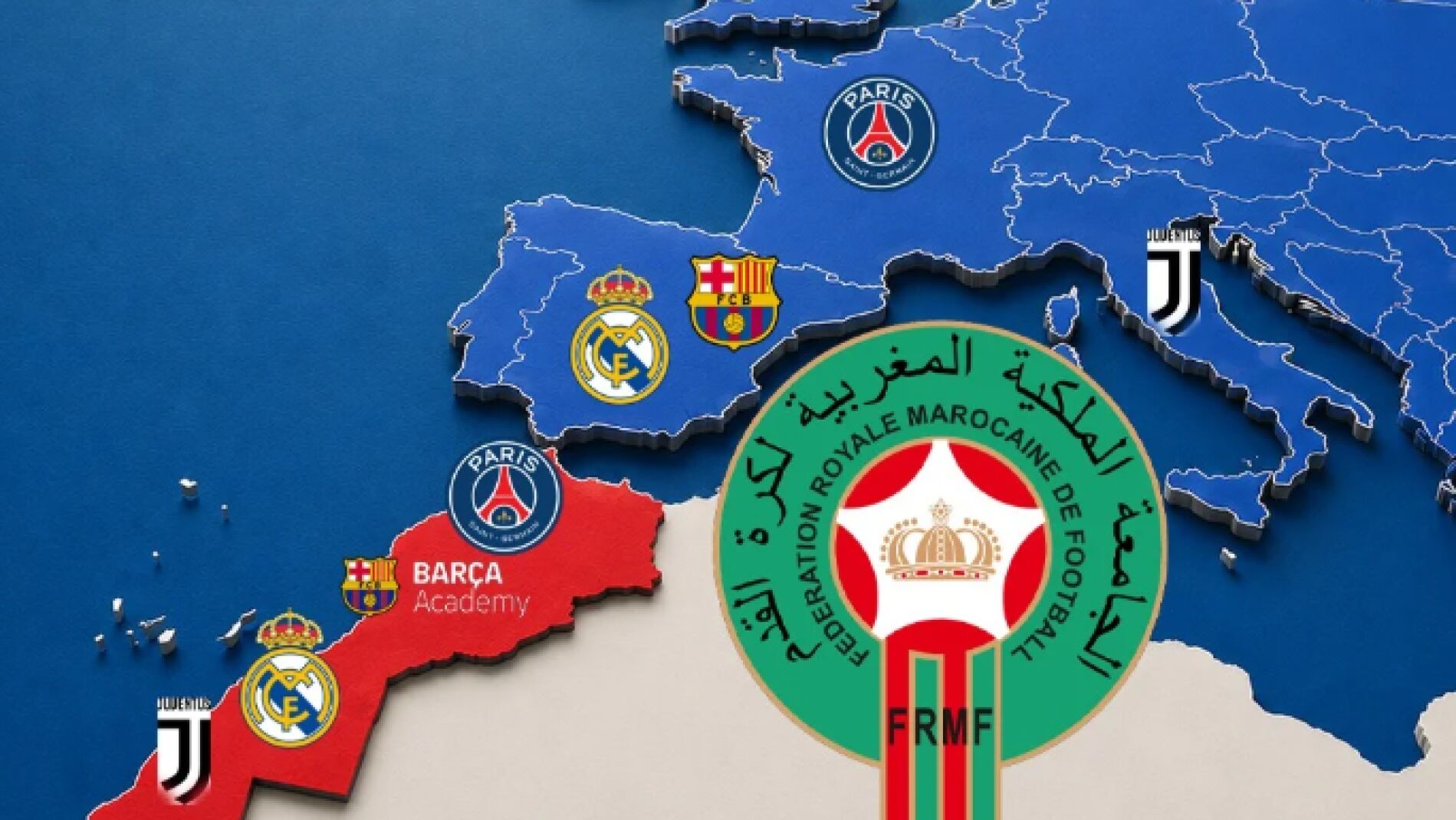
The Royal Moroccan Football Federation, led by President Fouzi Lekjaa, has ordered all private football academies in the country to stop using the names of foreign clubs. The directive applies immediately across the Kingdom, even to training centers holding existing sponsorship agreements or formal links with overseas entities.
The federation published the mandatory rule on its official website last Sunday. Officials framed the order as part of a national benchmark to organize and govern private sports training centers.
Autonomy and Strategic Goals for Moroccan Football
Moroccan football authorities issued the decree to shield the independence of the national training ecosystem. Morocco is preparing to co-host the 2030 World Cup alongside Spain and Portugal, with national sports leaders aiming to secure the tournament final.
An article published by Rue20 reported that the naming restriction represents a declaration of principles rather than a routine commercial control. Federation leaders decided that athletic talent developed on Moroccan soil must serve as the foundation of an independent national project rather than a promotional showcase for foreign brands.
An official federation statement explained that the ban aims to strengthen national support and align training with national strategic guidelines. The official text stated that the decision reflects the federation's commitment to establishing autonomy for private football academies and schools.
New Regulatory Framework and Operating Standards
Two days prior to the naming ban, the federation introduced a comprehensive regulatory framework for private academies. The framework creates a formal system of authorization, inspection, and classification across three tiers: Excellence, Good Performance, and In Development.
Under the new standards, academies must operate approved facilities, employ staff certified by the Confederation of African Football, and provide dedicated medical teams. Each center is also required to appoint a child protection officer.

Federation leaders stated that the measures signal Morocco's transition from a market for European football into an active nation determining its own future. Officials emphasized that banning foreign club branding is an act of defending national football development rather than isolated protectionism.
Recruiting Dual National Talents
Moroccan football authorities are expanding efforts to retain young talent ahead of the 2030 World Cup and prevent player departures to foreign national teams. The strategy includes increased monitoring of young European players who possess dual nationality.
The policy follows the decision of forward Lamine Yamal to play for Spain instead of Morocco. To prevent similar losses, the federation is emulating recruitment tactics implemented by Argentina's national team.

Argentina established an initiative known as Los Europibes to recruit young foreign-born players of Argentine descent, securing players like Alejandro Garnacho, Nico Paz, and Pablo Maffeo from top clubs including Real Madrid. Morocco is now deploying a similar model to recruit European talent with Moroccan heritage.
Impact on Real Madrid Foundation Projects
The naming restriction directly impacts the Real Madrid Foundation, which maintains active sports initiatives within the Kingdom. Real Madrid completed the season with 52 active socio-sports projects across 23 African countries, reaching 10,628 children and youth through programs focused on education, inclusion, and child protection.
The foundation operates in Angola, Benin, Cape Verde, Cameroon, Ivory Coast, Chad, Egypt, Ethiopia, Gabon, Ghana, Equatorial Guinea, Kenya, Madagascar, Morocco, Mauritania, Mozambique, Republic of the Congo, Sao Tome and Principe, Senegal, Sierra Leone, Tanzania, Togo, and Uganda. Within Morocco, Real Madrid runs projects in Rabat, Tangier, and Casablanca.
Status of FC Barcelona and Foreign Club Responses
FC Barcelona is exempt from the impact of the new regulations due to decisions made in May. The Catalan club announced the termination of its academy operations in Rabat and Casablanca, which had been active since 2023 and 2024 respectively.
Although Barcelona did not give specific reasons for ending its contract with the local management company, the club stated that it currently has no official sports project on Moroccan soil. The public statement served as a formal boundary against unauthorized commercial use of its name.

Neither Real Madrid nor Paris Saint-Germain has issued a public comment regarding the federation's new naming prohibition.